
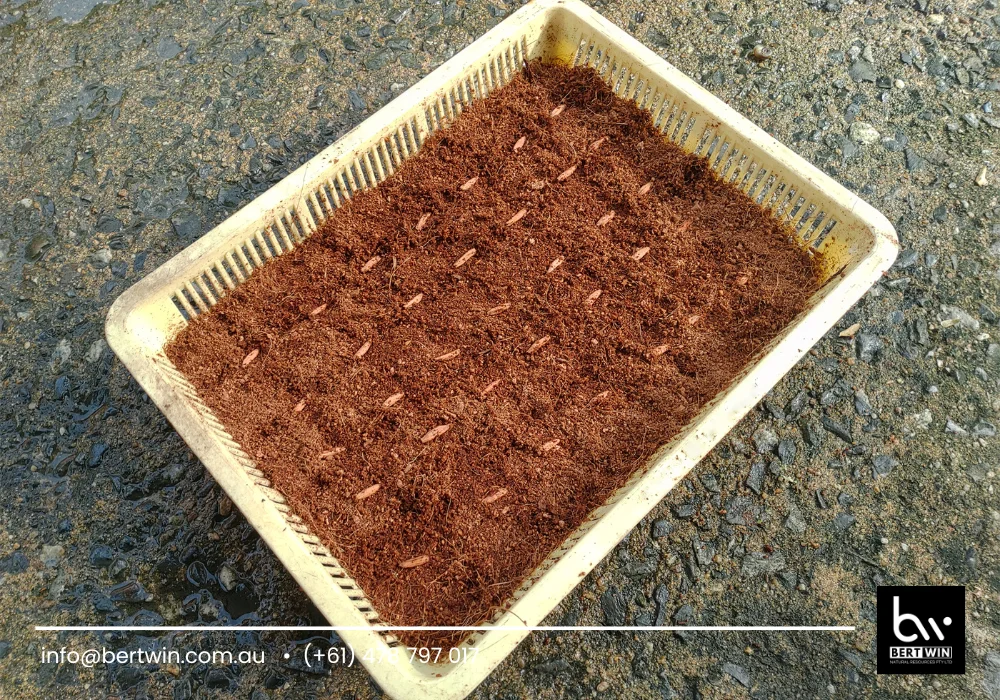
Coco peat compost is increasingly becoming a central topic in agricultural news as farmers, researchers, and environmental observers look for sustainable solutions to long-standing soil and productivity challenges. The background of this trend is rooted in climate change, declining soil fertility, and the global push to reduce reliance on non-renewable growing media, prompting wider adoption of coconut-based organic materials.
The Growing Relevance of Coco-Based Organic Media
The agricultural sector has undergone significant transformation over the past decade. Rapid population growth and changing consumption patterns have intensified pressure on arable land. In response, alternative cultivation methods and innovative growing media have gained attention, with coco peat compost emerging as one of the most discussed options.
This material originates from coconut husks, a by-product of the coconut industry that was previously underutilized. Its transformation into compost reflects broader efforts to promote sustainable resource management while supporting agricultural productivity.
What Makes Coco Peat Compost Distinct
Structure and Water Efficiency
Coco peat compost is known for its fibrous structure, which allows it to hold water efficiently while still maintaining adequate aeration. This balance is particularly important in modern cultivation systems where precise moisture control directly affects crop outcomes.
Agricultural analysts note that consistent water availability at the root zone can help reduce plant stress, especially in regions experiencing irregular rainfall patterns. As a result, coco-based compost is increasingly mentioned in discussions about climate-adaptive farming practices.
Compatibility With Various Crops
Another notable characteristic is its adaptability across different plant types. From vegetables and fruits to ornamentals and nursery plants, coco peat compost has demonstrated flexibility in supporting diverse cultivation needs.
This adaptability has attracted interest from both small-scale growers and large commercial operations, contributing to its expanding presence in agricultural supply chains.
Environmental Implications and Sustainability
Reducing Pressure on Natural Ecosystems
One of the primary environmental arguments in favor of coco peat compost is its role in reducing dependence on traditional peat extraction. Peatlands are critical carbon sinks, and their disturbance can lead to significant ecological damage.
By offering an alternative derived from renewable resources, coco-based compost supports conservation efforts while meeting agricultural demand. This dual benefit aligns with international sustainability goals frequently highlighted in environmental reports.
Supporting Circular Economy Principles
The use of coconut husks for compost production exemplifies circular economy principles, where waste materials are reintegrated into productive use. This approach not only reduces waste volumes but also adds economic value to agricultural by-products.
Industry observers point out that such practices strengthen rural economies by creating additional revenue streams for coconut-producing regions.
Applications in Modern Agricultural Systems
Controlled Environment Agriculture
Controlled environment agriculture, including hydroponics and greenhouse farming, relies heavily on consistent and predictable growing media. Coco peat compost integrates well into these systems, providing physical support while allowing precise nutrient management.
News coverage of greenhouse innovations often highlights coco-based substrates as a foundation for efficient, high-yield production, particularly in areas with limited access to fertile soil.
Land Rehabilitation and Soil Improvement
Beyond intensive farming, coco peat compost is also gaining attention for land rehabilitation projects. Its organic nature helps improve soil structure, increase moisture retention, and support microbial activity in degraded lands.
Environmental initiatives focused on restoring post-mining or overused agricultural areas have begun incorporating coco-based compost as part of their soil recovery strategies.
Nutrient Management and Cultivation Practices
Balancing Nutritional Inputs
While coco peat compost provides excellent physical properties, it requires proper nutrient supplementation to maximize plant performance. Farmers typically combine it with organic or mineral fertilizers tailored to specific crop requirements.
Experts emphasize that effective nutrient management, combined with regular monitoring, allows growers to achieve consistent results across multiple growing cycles.
Longevity and Reusability
Another practical advantage often cited is its durability. With appropriate treatment and sanitation, coco peat compost can be reused, reducing input costs and supporting sustainable production models.
This reusability is particularly relevant in commercial operations where efficiency and cost control are critical factors.
Market Developments and Industry Outlook
Increasing Global Demand
Market analysts report steady growth in demand for coco-based agricultural inputs. This trend is driven by rising awareness of sustainable farming practices and increasing investment in controlled environment agriculture.
As supply chains mature and quality standards improve, coco peat compost is expected to become more accessible to growers worldwide.
Future Perspectives
Looking forward, continued research and technological advancement are likely to enhance the performance and consistency of coco-based compost products. Innovations in processing and blending may further expand their applications across different agricultural sectors.
With sustainability remaining a central theme in global agriculture, coco peat compost is positioned as a long-term solution that addresses both environmental and production challenges.
For further information, you may contact WhatsApp at (+61) 478797017 or via email at info@bertwin.com.au.