
coco peat what is a question increasingly asked as sustainable agriculture and eco-friendly growing media gain global attention. Derived from coconut husks, coco peat has moved from being an overlooked agricultural by-product to a widely used material in farming, horticulture, and gardening. This background reflects how environmental concerns, soil degradation, and the need for renewable resources have pushed growers and industries to explore alternatives that are both practical and sustainable.
What Is Coco Peat and Where It Comes From
Coco peat what, also known as coir pith, is the fine, spongy material obtained after coconut fibers are extracted from the husk. Coconuts are harvested primarily for food, oil, and fiber, leaving behind husks that were once considered waste. Through processing, these husks are transformed into a valuable growing medium.
The popularity of coco peat what has grown alongside increased awareness of environmental preservation. Traditional peat moss extraction damages wetlands and releases stored carbon, while coco peat is renewable and sourced from an abundant agricultural by-product. This contrast has encouraged many producers and users to ask coco peat what benefits it offers compared to conventional materials.
Physical and Chemical Characteristics
Coco peat has a unique structure that makes it suitable for plant growth. It can retain water efficiently while still allowing air to circulate around plant roots. This balance helps prevent waterlogging and root rot, common problems in dense soils.
Chemically, coco peat is generally neutral to slightly acidic, making it adaptable for various crops. It contains natural lignin that allows it to decompose slowly, ensuring structural stability over extended use. These characteristics explain why coco peat is increasingly chosen for both small-scale gardening and large commercial operations.
Environmental Significance
From an environmental perspective, coco peat supports waste reduction and resource efficiency. Coconut-producing regions benefit by converting excess husks into exportable products rather than disposing of them. This process contributes to a circular economy where waste materials are reused productively.
How Coco Peat Is Processed
Understanding processing helps clarify coco peat what makes it suitable for agriculture. While methods vary by scale and technology, the core steps remain similar.
Collection and Initial Treatment
The process begins with collecting coconut husks from processing centers. These husks are soaked in water to soften them and facilitate fiber separation. Soaking also helps remove some impurities and prepares the material for mechanical processing.
After soaking, machines crush the husks to separate long fibers from the finer pith. The fibers are used in products such as ropes and mats, while the remaining pith becomes the base material for coco peat.
Washing and Drying Stages
Fresh coco peat often contains salts, especially if coconuts are sourced from coastal areas. Thorough washing reduces salinity to levels safe for plants. This step is essential for ensuring product quality and acceptance in international markets.
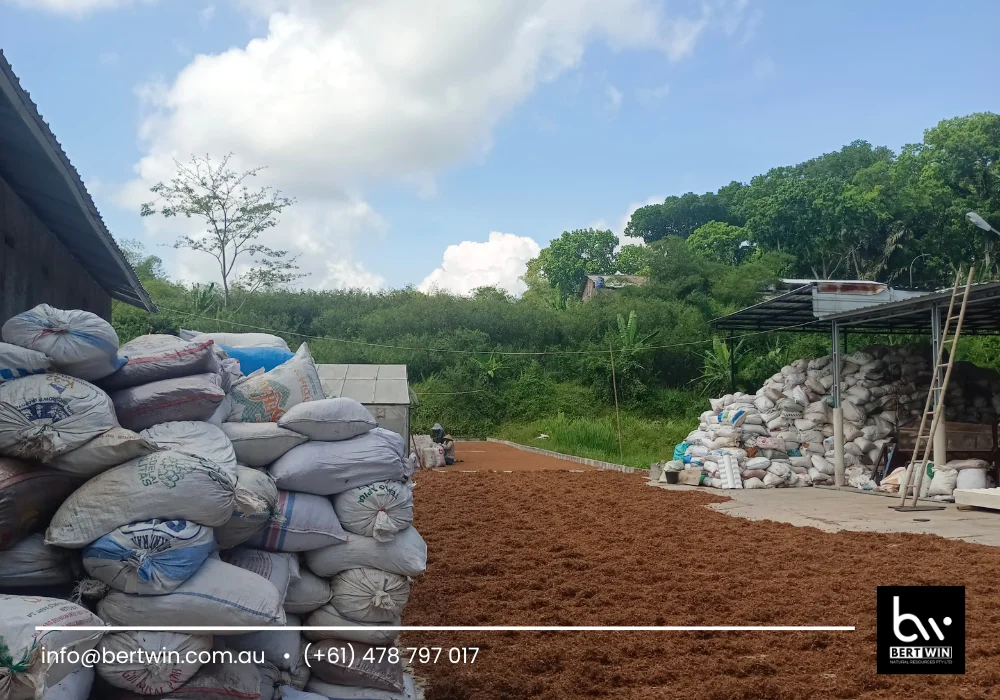
Once washed, the material is dried under controlled conditions or natural sunlight. Proper drying prevents microbial growth and ensures consistent moisture content, which is critical for storage and transportation.
Screening and Packaging
After drying, coco peat is screened to remove large particles and impurities. The final product can be sold loose or compressed into blocks, which are easier to transport and store. These blocks expand significantly when hydrated, making them convenient for global distribution.
Applications Across Different Sectors
The versatility of coco peat has expanded its use beyond traditional farming. Its adaptability answers many growers’ questions about coco peat what it can be used for.
Horticulture and Gardening
In horticulture, coco peat is widely used for seed starting and potting mixes. Its ability to hold moisture while maintaining aeration supports healthy germination and root development. Home gardeners appreciate its lightweight nature and clean handling compared to traditional soil.
Urban gardening initiatives also benefit from coco peat, especially in limited spaces where drainage and weight management are crucial.
Commercial Agriculture and Greenhouses
Commercial growers use coco peat extensively in greenhouse production. It provides uniform growing conditions, allowing precise control of irrigation and nutrient delivery. This consistency leads to predictable crop performance and improved yields.
In hydroponic systems, coco peat serves as an effective substrate that supports roots while allowing nutrients to be delivered through water-based solutions.
Landscaping and Soil Improvement
Beyond plant cultivation, coco peat is used in landscaping and soil conditioning. When mixed with existing soil, it improves structure, increases water retention, and enhances microbial activity. These improvements are particularly valuable in sandy or degraded soils.
Market Trends and Future Prospects
Global demand for sustainable agricultural inputs continues to rise, positioning coco peat as a strategic product in international trade.
Quality Standards and Export Markets
Importing countries often require strict quality standards, including low salinity and consistent particle size. Producers who meet these requirements gain access to premium markets and long-term contracts.
The growing emphasis on sustainable sourcing has further strengthened coco peat’s position as a preferred alternative to non-renewable materials.
Innovation and Product Development
Ongoing research focuses on enhancing coco peat performance through buffering and nutrient enrichment. These innovations aim to tailor products for specific crops and growing conditions, increasing efficiency for farmers.
As sustainability becomes a central consideration in agriculture, coco peat is expected to remain a key component of future growing systems.
Conclusion
The question of coco peat what it represents can be answered through its environmental, agricultural, and economic value. By transforming coconut husk waste into a reliable growing medium, coco peat supports sustainable practices while meeting the practical needs of modern cultivation. Its continued adoption reflects a broader shift toward renewable resources and responsible production methods.
For further information, you may contact WhatsApp at (+61) 478797017 or via email at info@bertwin.com.au.